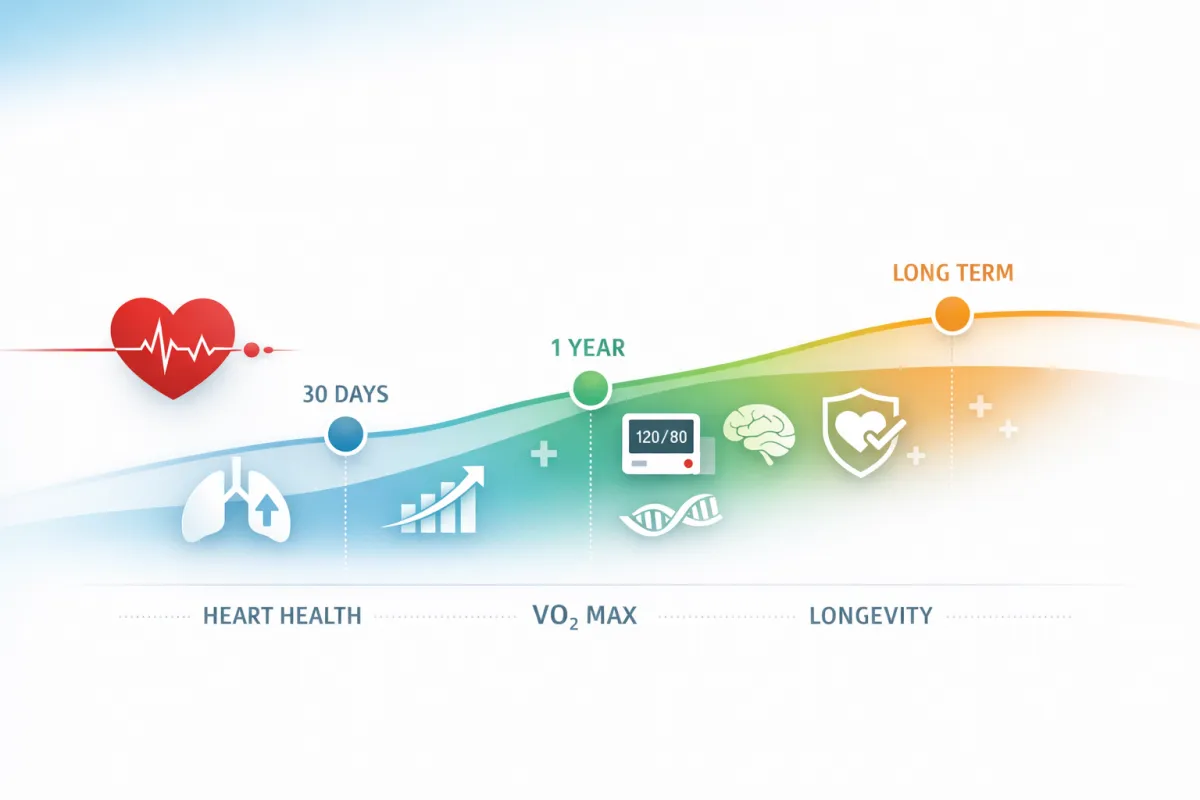
Why Add Cardio to Your Routine?
You have already done something most people never do: you show up consistently. Two to three days a week of strength training puts you ahead of over 80% of adults in this country. You are building muscle, protecting your joints, and maintaining the kind of functional strength that keeps you independent and active for decades to come.
Why add cardio?
Because strength and cardiovascular fitness are two different systems. When you train both, the results compound in ways that neither can achieve alone.
That is exactly why we launched our new Cardio Membership Add-On. Here is a straightforward look at what you can expect!
After 30 Days...You Will Feel It Before You See It
In the first month, the changes happening inside your body are not visible in the mirror but you will absolutely feel them.
Your heart is a muscle, and like any muscle, it responds quickly to new demands. Within a few weeks of regular cardio sessions, your resting heart rate will begin to drop. That means your heart is pumping more blood with each beat, working more efficiently at everything you do whether you are lifting, climbing stairs, or just going about your day.
Many clients also notice:
• Better sleep quality and an easier time falling asleep
• More energy throughout the day, especially in the afternoon
• Improved mood and reduced stress (cardio triggers a reliable release of endorphins)
• Slightly faster recovery between strength sessions
One of the fastest and most meaningful benefits cardio delivers is blood pressure often begins to trend downward within the first 4 weeks for those who start in an elevated range.
After One Year...A Measurably Different Body and Brain
This is where the data gets exciting. After a year of consistent cardio layered on top of your strength work, your body will look and function significantly differently.
Cardiovascular capacity is your VO2 max, or how efficiently your body uses oxygen. It can improve by 15 to 20% in the first year for adults who start a regular aerobic routine. That number matters more than most people realize. Higher VO2 max is one of the strongest predictors of longevity in medical research. It is more predictive than cholesterol, blood pressure, or BMI.
At the one-year mark, clients typically report:
• Fat loss around the midsection
• Noticeably better stamina during strength sessions
• Reduced joint inflammation and less general stiffness
• Sharper mental focus and memory (aerobic exercise increases blood flow to the brain)
• Improved blood sugar regulation and insulin sensitivity
For those managing pre-diabetes, elevated cholesterol, or high blood pressure, the one-year mark is often when physicians start reducing or reconsidering medications.
After Many Years...The Gift You Give Your Future Self
The research on long-term cardiovascular exercise in adults aged 35 to 70 is remarkably consistent. People who maintain regular cardio alongside strength training experience:
• A 22–38% lower risk of cardiovascular disease death, according to research published in the American Heart Association’s journal Circulation
• Significantly reduced risk of type 2 diabetes
• Lower rates of cognitive decline and dementia
• Stronger bones and lower fracture risk (especially important post-50)
• Better balance and coordination, reducing fall risk as you age
• More years of independent, active living
Long-term cardio training also preserves the gains you are making in the weight room. Cardiovascular health supports muscle recovery, hormonal balance, and the deep sleep your body needs to rebuild after hard training sessions.
Cardio Party was built specifically for people who are already committed to training and want to take their results further. Talk to your trainer at your next session, or reach out directly to learn more. We are proud of the work you have already put in!